What to check before you book an ATV ride in the Dubai desert
Know what you are signing up for
Dubai’s desert landscape draws many visitors looking for a fast-paced outdoor activity. An all-terrain vehicle (ATV) ride across the dunes can be a memorable part of a trip, but not every operator offers the same experience. Before you commit to a booking, it pays to understand a few practical details that can make the difference between a smooth ride and a frustrating afternoon. This article covers the main points to look into so you can arrive prepared and enjoy the experience without surprises.
Check the vehicle condition and type
The machine you ride matters more than most other factors. A well-maintained ATV handles the desert terrain with stability, while a neglected one can spoil the fun and raise safety concerns. When you browse options, look for operators who mention regular maintenance or show recent photos of their fleet. Older models may lack basic features such as proper suspension or reliable brakes, so it is worth asking about the age of the vehicles. Some tours use quad bikes that are designed for dunes, while others offer a quad bike alternative, such as a buggy or a dune buggy, which might suit a group with mixed confidence levels. If you have a preference, confirm the exact type of vehicle before you pay.
Safety goggles are a standard piece of gear in the desert. Dust and sand can blow up quickly, especially when you follow another rider. Check whether the operator provides goggles and a helmet, and whether those items are cleaned between uses. If you wear prescription glasses, ask if the goggles fit over them. Small details like these affect your comfort throughout the ride.
Understand the route and terrain
Not all desert areas are the same. Some operators stick to flat, open areas where beginners can get a feel for the controls. Others take you into real dune driving, with steep slopes and soft sand that require more skill. Think about your own experience level and choose a route that matches it. A sunrise trip, for example, often covers different terrain than a midday ride, and the lower light can make it harder to see dips and ridges. Ask about the distance covered and the duration of active riding time. Some tours include long stops for photos or refreshments, so the actual time on the vehicle may be shorter than the total tour length.
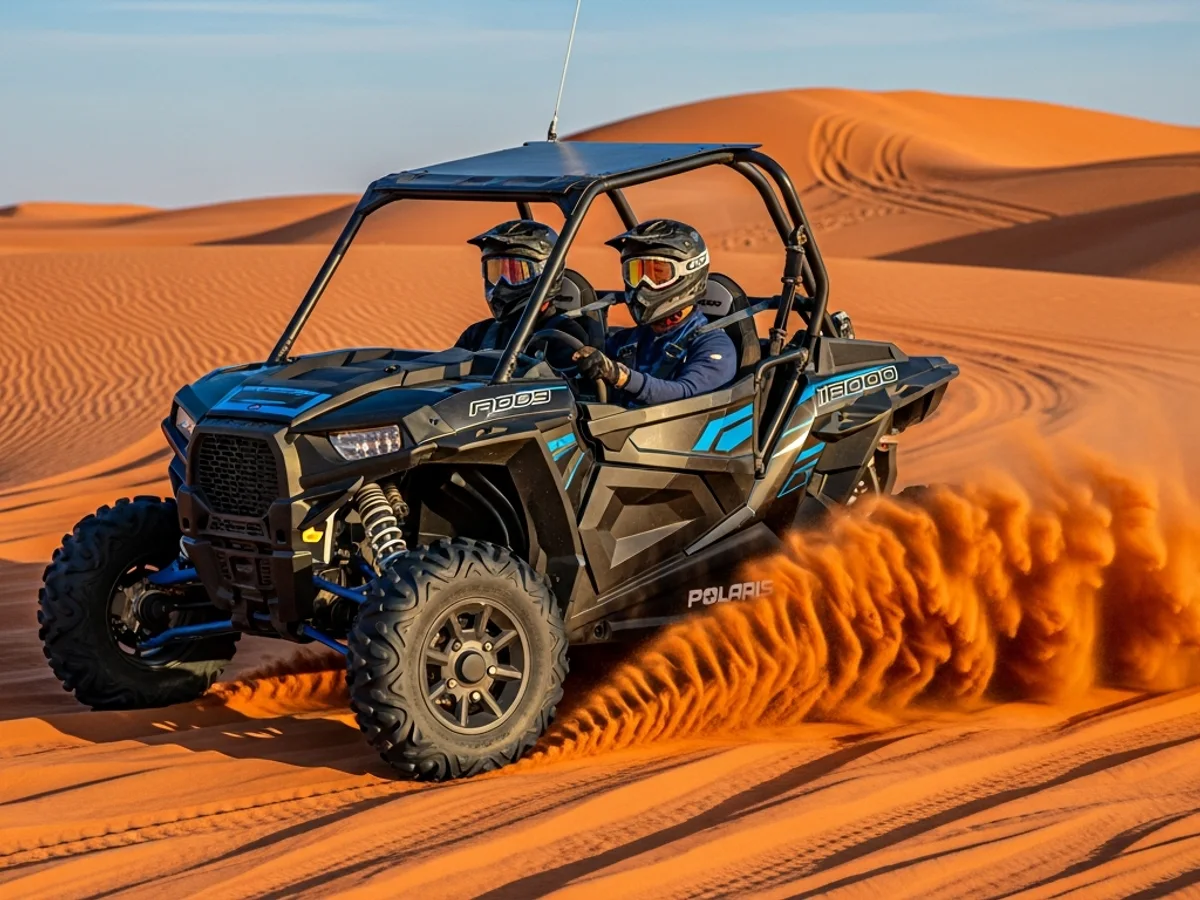
If you are new to off-road riding, a route that mixes flat stretches with gentle dunes gives you a chance to build confidence. Experienced riders may prefer a more challenging course with higher dunes and faster sections. Either way, a good tour guide briefs you on the terrain before you set off and stays within sight during the ride. Avoid operators who treat the route as a mystery until you arrive.
Confirm the safety briefing and guidance level
A proper safety briefing covers basic controls, emergency stopping, and how to handle a tip-over. It should also explain hand signals used by the guides and the expected spacing between riders. If the briefing is rushed or absent, that is a red flag. The guide’s role is not just to lead the group but to monitor each rider’s position and intervene if someone struggles. Ask how many riders each guide supervises. A low ratio means more attention per person, which matters if someone in your group has never ridden before.
Speed limits in the desert are rarely posted, but a responsible operator sets a pace that suits the group and the terrain. If you are riding with people who have very different skill levels, check whether the group stays together or whether faster riders are allowed to pull ahead. Some tours split into ability groups, which can make the experience better for everyone.
Look at the booking and cancellation policy
Desert weather can change fast. A sandstorm or extreme heat may force a cancellation. Read the operator’s policy on cancellations and refunds before you book. Some companies offer a full refund if they cancel, while others only give a credit. Also check what happens if you arrive late or want to reschedule. A clear policy shows that the operator is organised and treats customers fairly. Avoid any company that asks for full payment upfront with no clear refund terms.
Insurance is another point to clarify. Ask whether the price includes any damage waiver or liability cover. If you damage the vehicle during the ride, you may be charged for repairs unless you have agreed on terms beforehand. It is better to know this before you sit on the machine than to argue about it afterward.
Consider the time of day and season
The desert heat is intense during the middle of the day for much of the year. A sunrise trip or a late afternoon slot is cooler and offers better light for photos. Many operators schedule rides around these times for good reason. If you are visiting between May and September, avoid any tour that runs past 10 a.m. unless it provides air-conditioned breaks. Dehydration and heat exhaustion are real risks when you are active in sand that reflects the sun upward. Bring water regardless of what the operator supplies.

Wind direction also matters. Dust storms are more common in the summer months. If the forecast shows strong winds, consider rescheduling. Riding in poor visibility is not enjoyable and can be dangerous if you lose sight of the guide or the path ahead.
Read between the lines of online reviews
Reviews can tell you a lot, but you have to read them with a critical eye. Look for recent comments that mention vehicle condition, guide behaviour, and adherence to safety practices. A string of glowing five-star reviews with no specifics may be less reliable than a balanced review that mentions both positives and a minor issue. Pay attention to how the operator responds to negative feedback. A defensive or dismissive reply suggests they do not take complaints seriously. A professional response that addresses the problem is a better sign.
If you see repeated mentions of broken equipment, long waits, or guides who seem distracted, take those as serious warnings. On the other hand, a few complaints about waiting times on busy days may not reflect the typical experience. Use your judgment and cross-check information across multiple platforms.
Know what is included and what costs extra
The advertised price sometimes covers only the ride itself. Extras such as transport from your hotel, refreshments, photography, or a longer route can add to the final cost. Ask for a full list of inclusions and exclusions before you book. Some operators offer a package that includes a meal or a camp visit after the ride. If those extras matter to you, confirm that they are part of the tour and not optional add-ons sold separately. A transparent operator will give you a written breakdown. If they avoid answering direct questions, move on to another provider.
quad biking dubai has become a popular search term, and the number of options can be overwhelming. Narrowing down your choices by checking these practical points will help you find a ride that fits your expectations and your budget. The goal is to spend your time on the dunes, not on logistics or disappointment.
Trust your instincts
If something feels off during your research, it probably is. A company that pressures you to book immediately, refuses to answer questions, or posts photos that look heavily edited is worth skipping. The best operators are confident in what they offer and are happy to provide clear answers. Take your time, compare a few options, and choose the one that gives you the most confidence before you ride.
Desert riding is a fantastic way to see the landscape from a different perspective. With a little preparation and the right questions, you can make sure your experience is safe, comfortable, and genuinely fun. quad biking dubai offers a range of tours, and the one that suits you best is out there if you take the time to look beyond the flashy advertisements.